
The power industry isn’t facing a demand problem. It’s facing an execution problem.
Electricity demand is accelerating, driven by data center growth, electrification, and industrial reshoring, but the infrastructure required to support that demand is struggling to keep pace. The constraint isn’t theoretical capacity. It’s the ability to build, deliver, and deploy the systems needed to generate and distribute power at scale.
For data center developers and operators, this shift is already impacting timelines, costs, and risk.
Where the Real Bottlenecks Are
At a high level, the narrative is simple: demand is rising faster than supply. But in practice, the pressure is showing up deeper in the system.
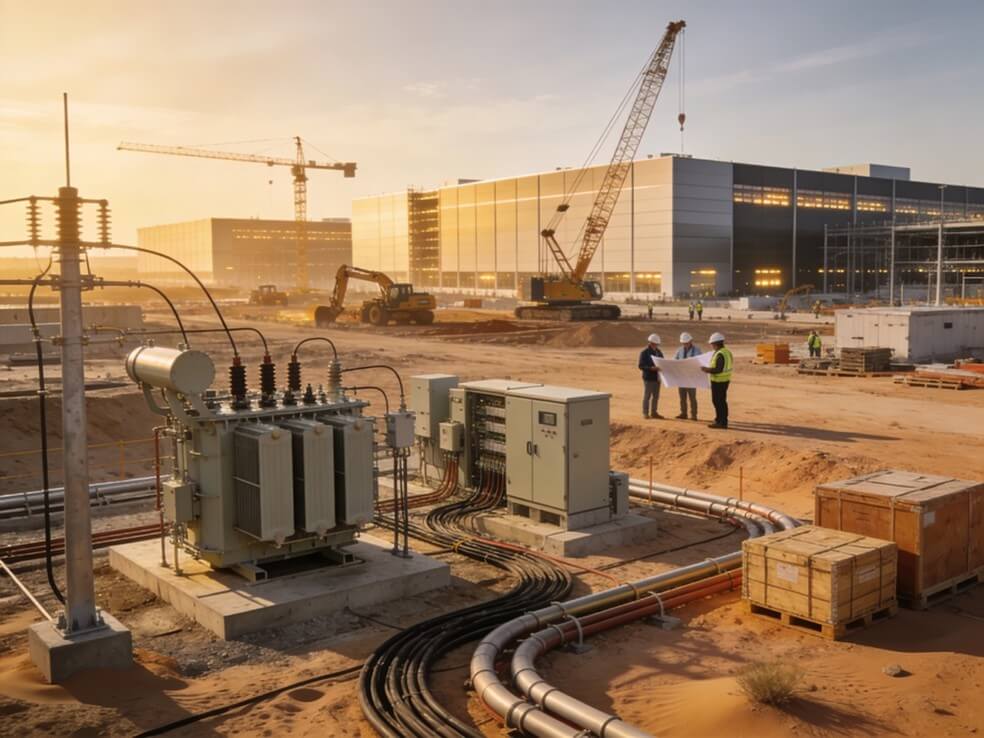
Critical constraints include long-lead equipment such as turbines, generators, and transformers, along with specialized materials like electrical steel and nickel-based alloys. Manufacturing capacity for these components has not scaled at the same pace as demand, creating multi-year delays for essential infrastructure.
This means power availability is no longer just a function of grid access. It is directly tied to global supply chain dynamics that most developers do not control.
Data Centers Are Reshaping Power Demand
What makes this cycle different from previous energy expansions is the nature of the demand itself.
Data centers, especially those supporting AI and high-performance computing, require large amounts of power delivered quickly, reliably, and often in concentrated locations. This is forcing utilities, developers, and infrastructure providers to rethink how power is planned and deployed.
Traditional grid expansion alone is not keeping pace. As a result, the industry is shifting toward more flexible approaches, including onsite generation, hybrid power systems, and modular infrastructure that can scale more quickly.
These approaches offer speed, but they also introduce new layers of complexity.
Modularity Changes the Game – And Raises the Stakes
Emerging solutions like small modular reactors (SMRs) highlight both the opportunity and the challenge.
SMRs rely on factory-built components, standardized designs, and global supply chains to accelerate deployment. But that model also creates dependencies across manufacturing, logistics, and installation that must be tightly coordinated.
Even seemingly minor elements, such as protective coatings and material durability, become critical when equipment is transported across long distances and expected to perform in demanding operating environments. Failures at any stage can delay projects and increase costs.
As infrastructure becomes more modular and industrialized, execution risk doesn’t go away. It becomes more distributed and harder to manage without the right expertise.
From Procurement to Strategy
Historically, power infrastructure was treated as a procurement exercise. Equipment was specified, ordered, and delivered within relatively predictable timelines.
That model no longer holds.
Today’s leading developers are shifting toward a more strategic approach, focused on early planning, supplier alignment, and proactive risk management. This includes reserving manufacturing capacity, standardizing designs where possible, and integrating supply chain considerations into project development from the outset.
Power is no longer just an input. It is a core part of the development strategy.
Execution Is the Differentiator
Across the industry, one pattern is clear.
Projects that move forward successfully are not necessarily the ones with the most advanced technology. They are the ones that make critical decisions early and align engineering, procurement, and construction around a realistic execution plan.
This includes locking in suppliers early, designing for manufacturability, and accounting for real-world operating conditions – not just theoretical performance.
Projects that delay these decisions often face rework, cost overruns, and schedule delays that could have been avoided.
What This Means for Data Center Developers
For data center operators and developers, the implications are immediate.
Power strategy must now account for supply chain realities, not just capacity planning. Lead times, equipment availability, and integration complexity all need to be addressed earlier in the development lifecycle.
Relying solely on traditional grid timelines is no longer sufficient. Projects that succeed will be those that take a more integrated and proactive approach to power infrastructure.
Where Network Environments Delivers Value
Network Environments operates at the intersection of power strategy and execution.
The company works with data center developers to bridge the gap between what is needed on paper and what can be delivered in the field. This includes early-stage system design, equipment sourcing, supplier coordination, and deployment planning aligned with real-world constraints.
By focusing on execution from the outset, Network Environments helps reduce risk, shorten timelines, and ensure that critical power infrastructure is delivered when and where it is needed.
Because in today’s environment, the difference between a project that gets built and one that stalls isn’t demand.
It’s execution.
If you’re planning your next data center project, connect with Network Environments to ensure your power strategy is built for real-world execution.